


Dylan NathanStageverse — A Cross Platform Spatial Experience01 — Platform Vision
Building the social layer of the metaverse from the ground upStageverse was an early-stage startup building a cross-platform social metaverse — a persistent shared world spanning iOS, Android, VR, and web, built around presence, community, live events, and creator-driven experiences. As Principal Designer and Creative Director, I was responsible for the full creative and product design vision of the platform: spatial design, avatar systems, brand identity, product strategy, and creative direction for brand partnerships and experiential launches. Working closely with a UI designer and a small founding team, I defined the design language, experience architecture, and visual standards that shaped everything users encountered — from the moment they first entered the platform to the environments they gathered in and the avatars they inhabited. 02 — Mobile & Cross-Platform
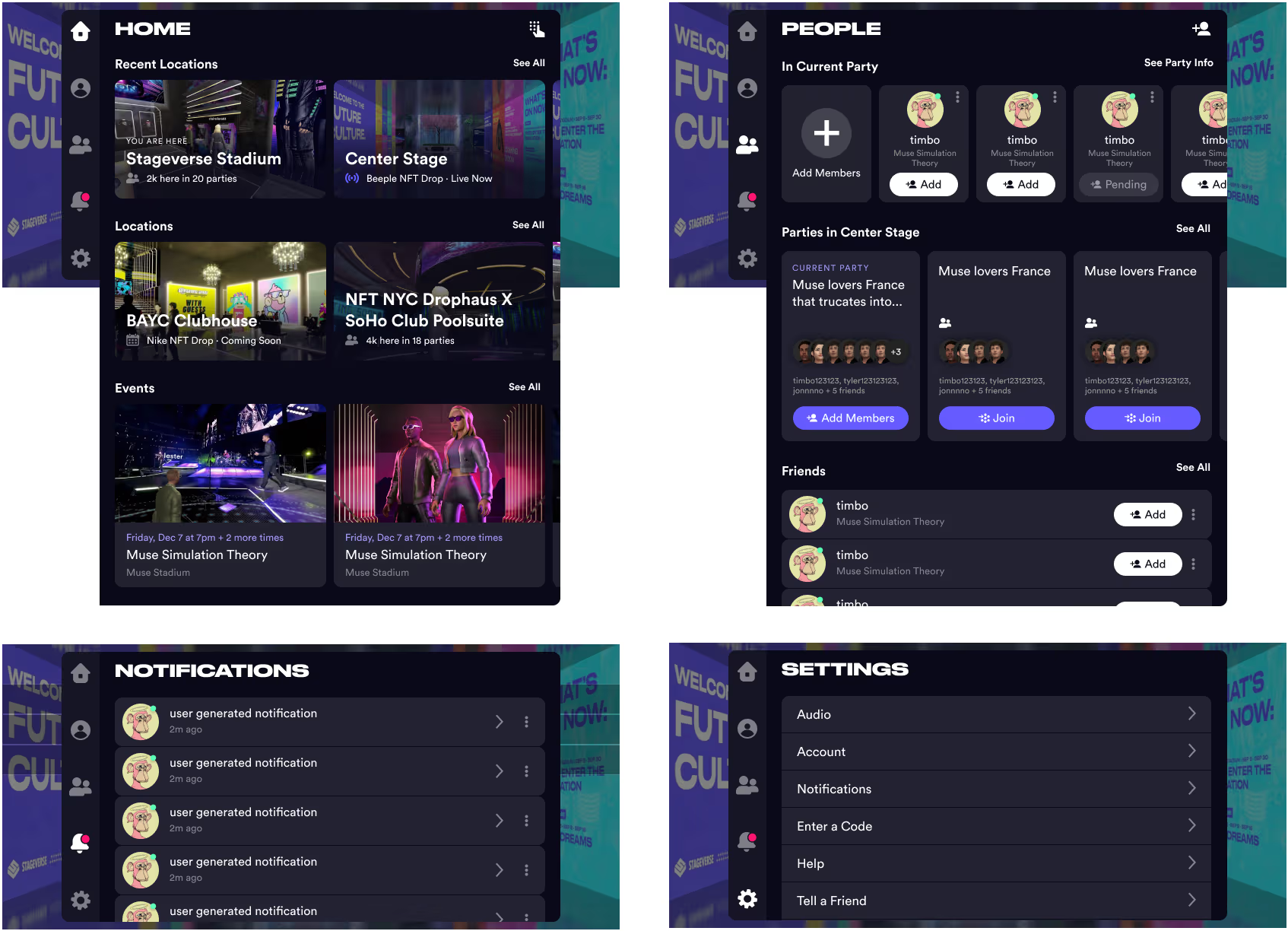
One design system, two mediums — VR and mobile from a shared component architectureThe platform was built in Unity with shared components spanning VR, mobile, and web — a deliberate architectural decision that shaped every design choice from the start. The UI system was designed so that it could live natively in three-dimensional space and on a flat mobile screen without feeling like a port of either. The solution was a tablet interface metaphor in VR — a panel that surfaces at a comfortable distance from the user, lazy-following body position — which translated directly to landscape orientation on mobile, letting components be designed once and reused across both mediums without modification, a constraint that enforced design discipline and prevented platform-specific drift across the team. All design, marketing, and brand work was centralized to maintain consistency. The user flow and first-time experience (FTUX) were tuned to each platform's input model, minimizing friction and getting users into the social world as quickly as possible. 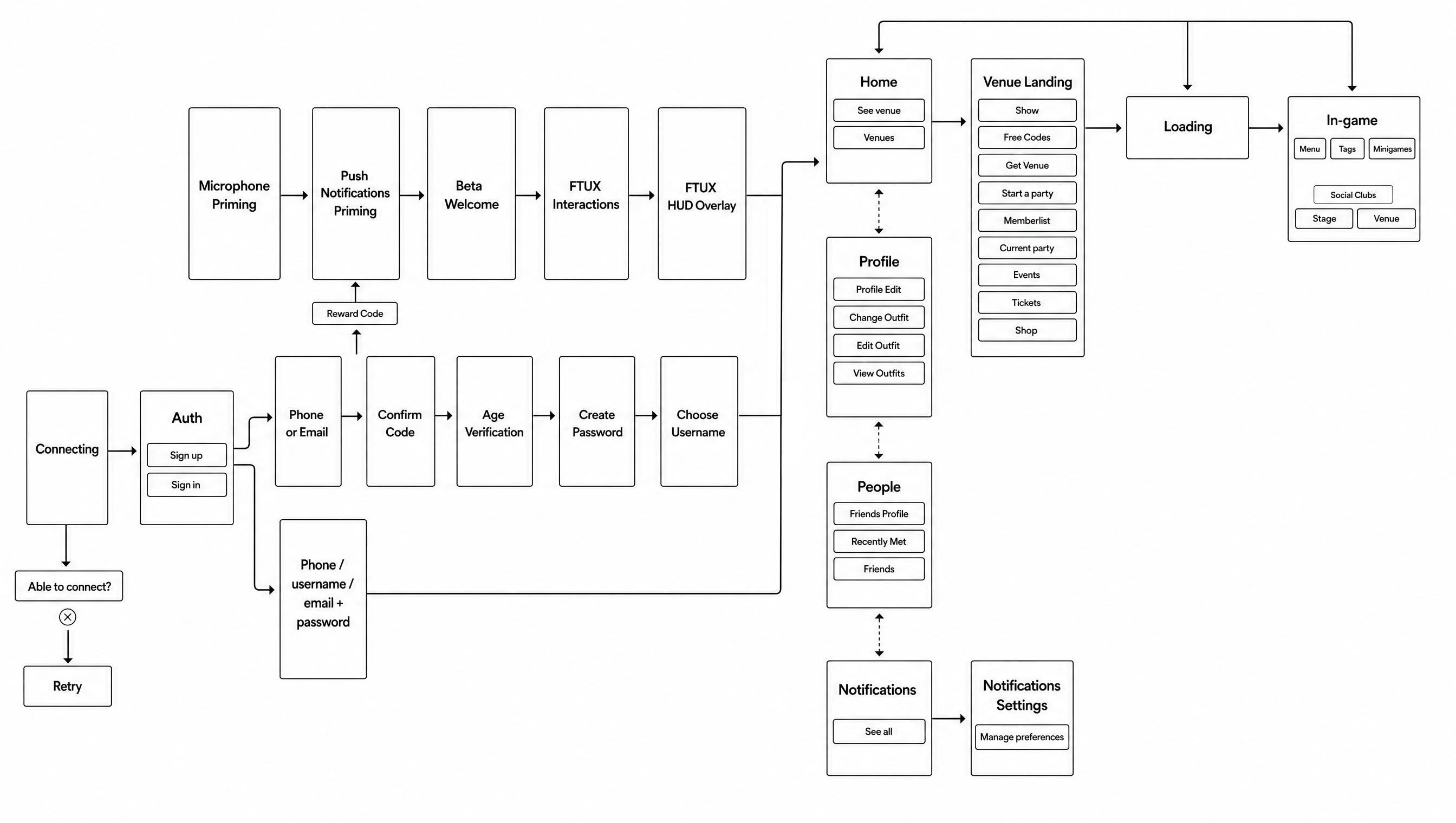
User flow — cross-platform architecture mapping the full experience from onboarding through core social features
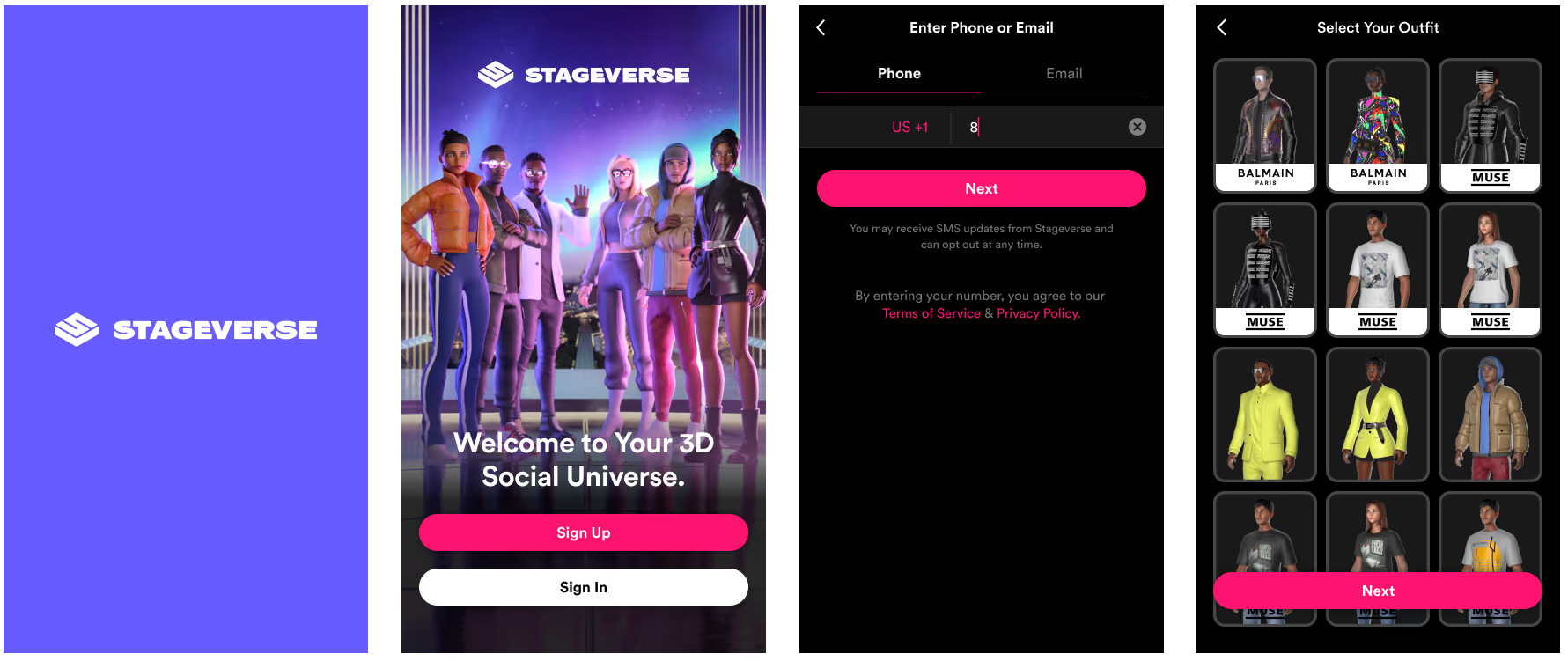
Mobile UI — landscape orientation translating directly from the VR tablet metaphor, with shared component architecture across platforms
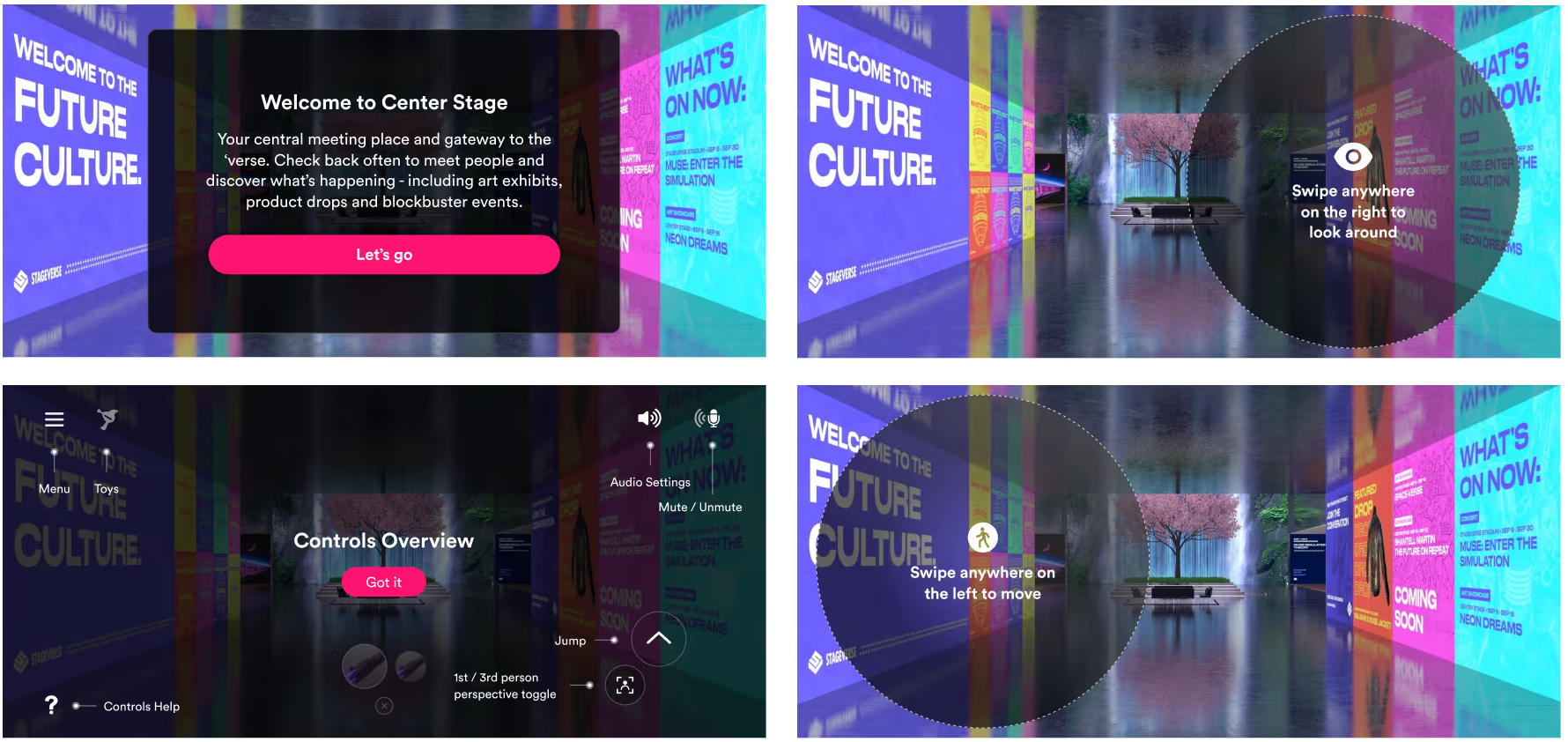
First-time user experience (FTUX) — mobile onboarding designed for minimal friction and fast path into the social world
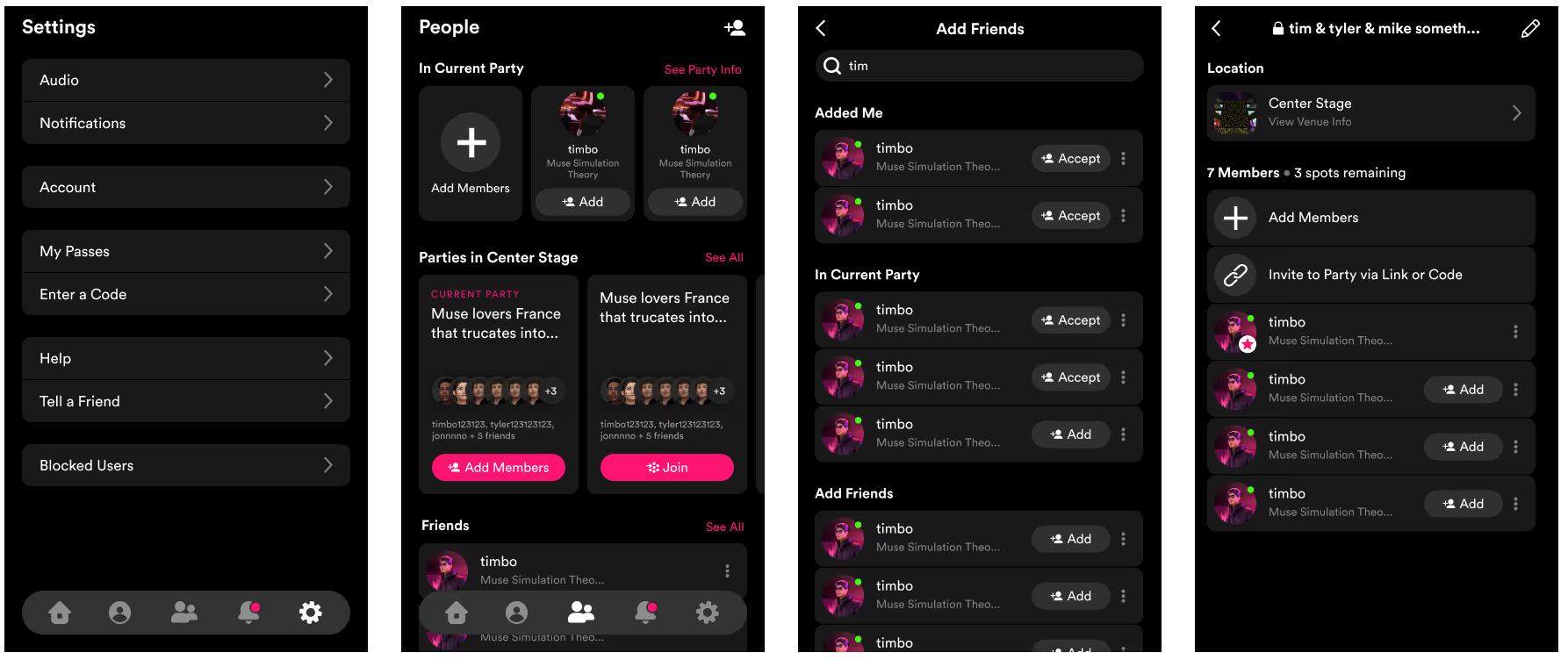
Platform overview — full product surface across mobile and VR, showing the range of screens and interaction contexts
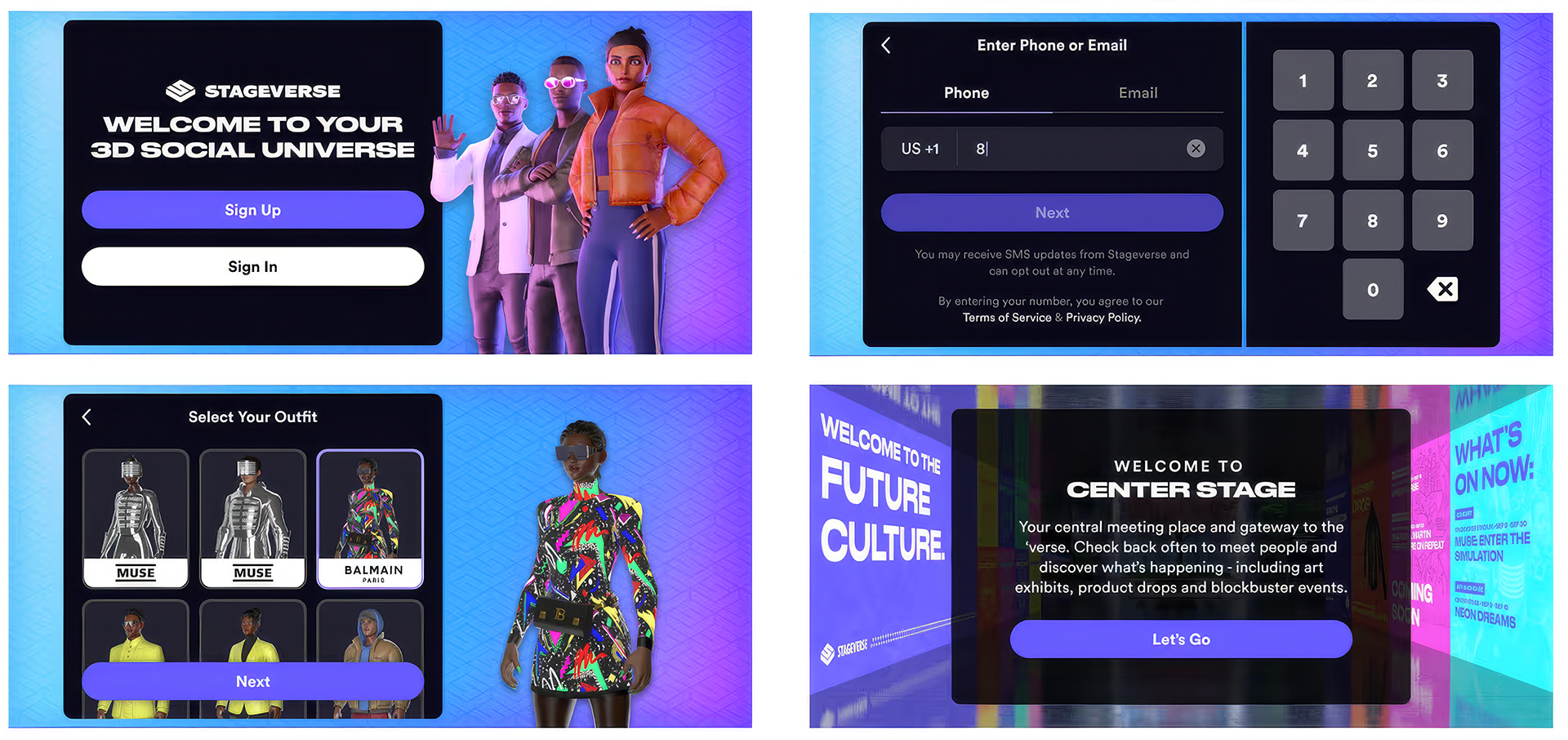
Version 2 mobile interface — full visual refresh, feeling native to mobile without compromise
Version 2 VR interface — the same universal system in three-dimensional space
03 — Center Stage
A three-story atrium at the heart of the platform — built for brand partnerships and communityCenter Stage was the gravitational center of Stageverse — the space every user passed through on their way into the platform. The three-story atrium was designed to host NFT art exhibitions across its upper floors, with a monumental animated artwork anchoring the back wall. At ground level, the space opened into dedicated activation zones for brand and creator partnerships — hosting collaborations with Proximity (one of YouTube's largest music channels), Balmain, and artist Shantell Martin. The lobby feeding into the atrium featured floor-to-ceiling animated screens designed for full brand takeover, a system I developed to be reused across dozens of brand integrations throughout the platform's life. 
Center Stage atrium — three stories, monumental animated art wall, brand activation zones at ground level
04 — Social Spaces & Galleries
Functional spaces designed around how people actually gatherFollowing the Muse launch, the platform expanded into a suite of purpose-built social spaces — each designed around a distinct social function rather than a generic venue template. The gallery spaces reimagined the digital art exhibition: one version prioritized natural light, water features, and a calming atrium environment for creators exhibiting personal work or NFTs; another leaned into a darker, gallery-forward aesthetic where the architecture receded and self-illuminating, floor-to-ceiling artwork panels became the environment. Both treated the space itself as a design medium, not just a backdrop. Additional spaces included listening lounges, party spaces, and a media room — each with its own spatial logic and atmosphere, connected through a coherent platform identity. 
Light gallery — a spatial exhibition environment for personal art and NFT display

Gallery atrium — water feature, natural light, and organic materials bringing a calmer, more grounded spatial quality

Dark gallery variant — architecture recedes to foreground self-illuminating floor-to-ceiling art panels

Alternate view of the dark gallery space

Vibe space — designed for social gatherings, with mood lighting and a relaxed spatial atmosphere

Alternate view of the vibe space
05 — Personal Spaces
A space of one's own — persistent, personal, and shareableUser homes were designed as a persistent personal space — somewhere a user could return to, customize, display their NFT collection, and invite guests. Set above the clouds for a sense of private elevation, each home featured a personal music player with curated playlists, display walls for NFT art, an outdoor pool, and room for guests to visit and socialize. The design challenge was to make a space feel genuinely personal and lived-in — expressive of identity — rather than a generic template. Users could bring friends in and explore together, with spatial voice chat allowing natural conversation throughout. 
User home — floating above the clouds, with personal music player, NFT display walls, and customizable identity

Exterior view — outdoor pool and personal NFT art collection displayed throughout the space

Shared personal space — two users socializing with NFT art displayed throughout
06 — Virtual Fashion
The runway reimagined in three dimensionsDuring Covid, with physical fashion shows cancelled globally, Stageverse developed a concept for virtual runway experiences pitched to major fashion houses. The concept placed model avatars on a catwalk inside a virtual recreation of the Palais Garnier Opera House in Paris — one of the world's most architecturally dramatic interiors — combining the grandeur of a historic venue with the creative freedom of a virtual environment. The pitch explored how fashion could use virtual space not just as a substitute for physical events but as a medium with its own distinct possibilities: unconstrained by physics, geography, or venue capacity. 
Virtual fashion show concept — model avatars on the catwalk inside a virtual Palais Garnier Opera House, Paris
07 — Avatars & Expression
High fidelity, inclusive, and genuinely expressiveAvatar design was treated as a core pillar of the platform — not a feature but a foundation of identity and social presence. The avatar system was designed to be genuinely inclusive, with a wide range of ethnicities, body types, and fashion styles represented at a material fidelity that was notably ahead of anything comparable at the time. Clothing was rendered with real-time attention to fabric weight, texture, and light response — a standard set by the Balmain collaboration on the Muse experience and carried forward across the full avatar library. To bring the avatars to life beyond their visual design, I recruited a team of artists including a dedicated animator to develop a library of custom emotes — expressive, character-driven movements that gave users a genuine sense of presence and personality within the shared space. 
Stageverse avatar collection — designed for inclusivity across ethnicity, style, and high fidelity real-time materiality

Custom emote animations — character-driven movement library designed to give users genuine presence and expressiveness
|